Cavellia anguicula
Cavellia anguicula was described by Lovell Reeve in 1852 as Helix anguicula. It is the subject of the archive’s first full factsheet, by Frank Climo and Karin Mahlfeld. It belongs to the Charopidae: mostly tiny, finely ribbed snails of forest litter, and the largest family of New Zealand land snails.
| Family | Charopidae |
| Authority | (Reeve, 1852) |
| Threat status | Not Threatened (NZTCS); Indigenous, endemic |
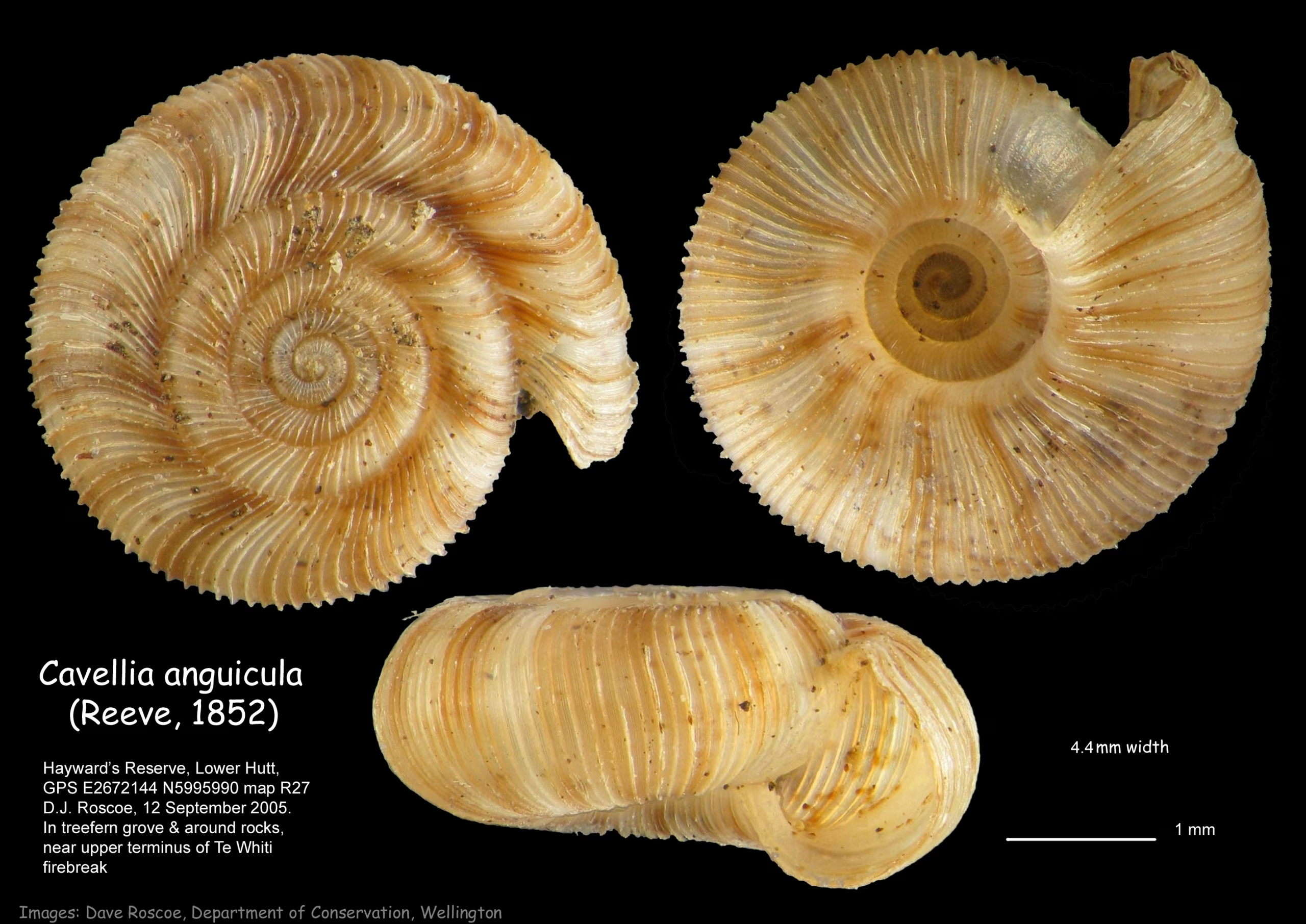
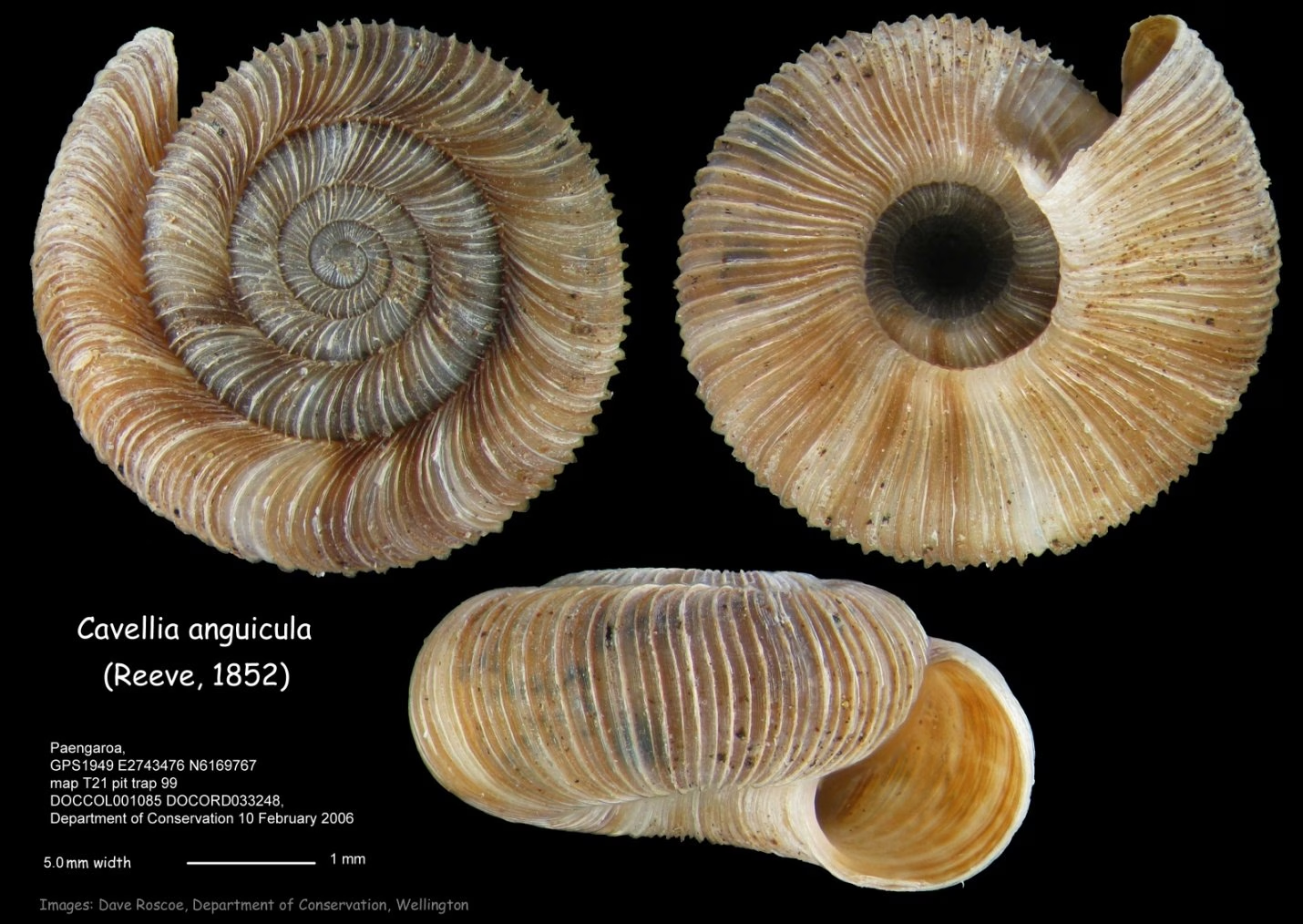
| Shell | About 4.4 mm across at 5 whorls; discoidal or biconcave, axially ribbed, umbilicated, translucent pale buff with brown axial colour streaks. |
Distribution
Widespread in North Island (south of Auckland and Coromandel) and northern South Island, with scattered occurrences along the eastern coast south to Dunedin. This species is relatively common and can reach more than 20 specimens in a leaf litter sample of a few litres.
Habitat
Often associated with decaying wood, found in forest leaf litter from sea level to at least 1000 m. Specimens have also been collected from under ferns and fallen logs, under and next to limestone boulders, off limestone ledges, in detritus from cave entrances and middens.
Shell in detail
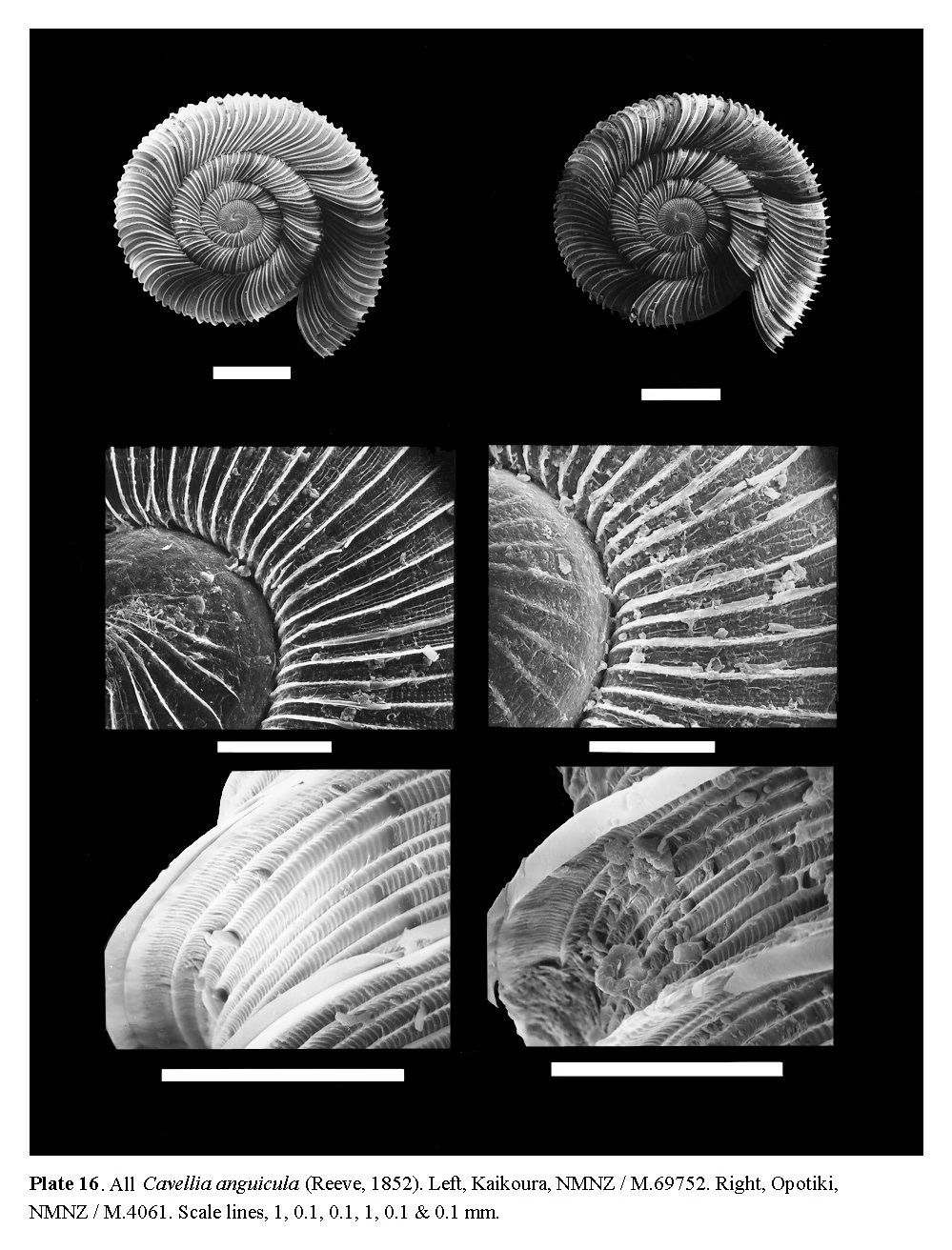
Spire height varies from sunken to weakly elevated. Umbilicus wide, about one third of the maximum shell diameter. Protoconch of 1.4 whorls, axially ribbed and spirally lirate. Teleoconch whorls convex, increasing regularly and moderately fast, with primary axial ribs of alternating height crested by a long periostracal blade, and secondary axials between them. Narrowly spaced spiral lirae cross the axials, forming minute beads where they intersect. Aperture obliquely round; outer lip retracted at the suture, leaving a distinct sinus. Columella short, oblique and only slightly reflexed.
Reproductive anatomy
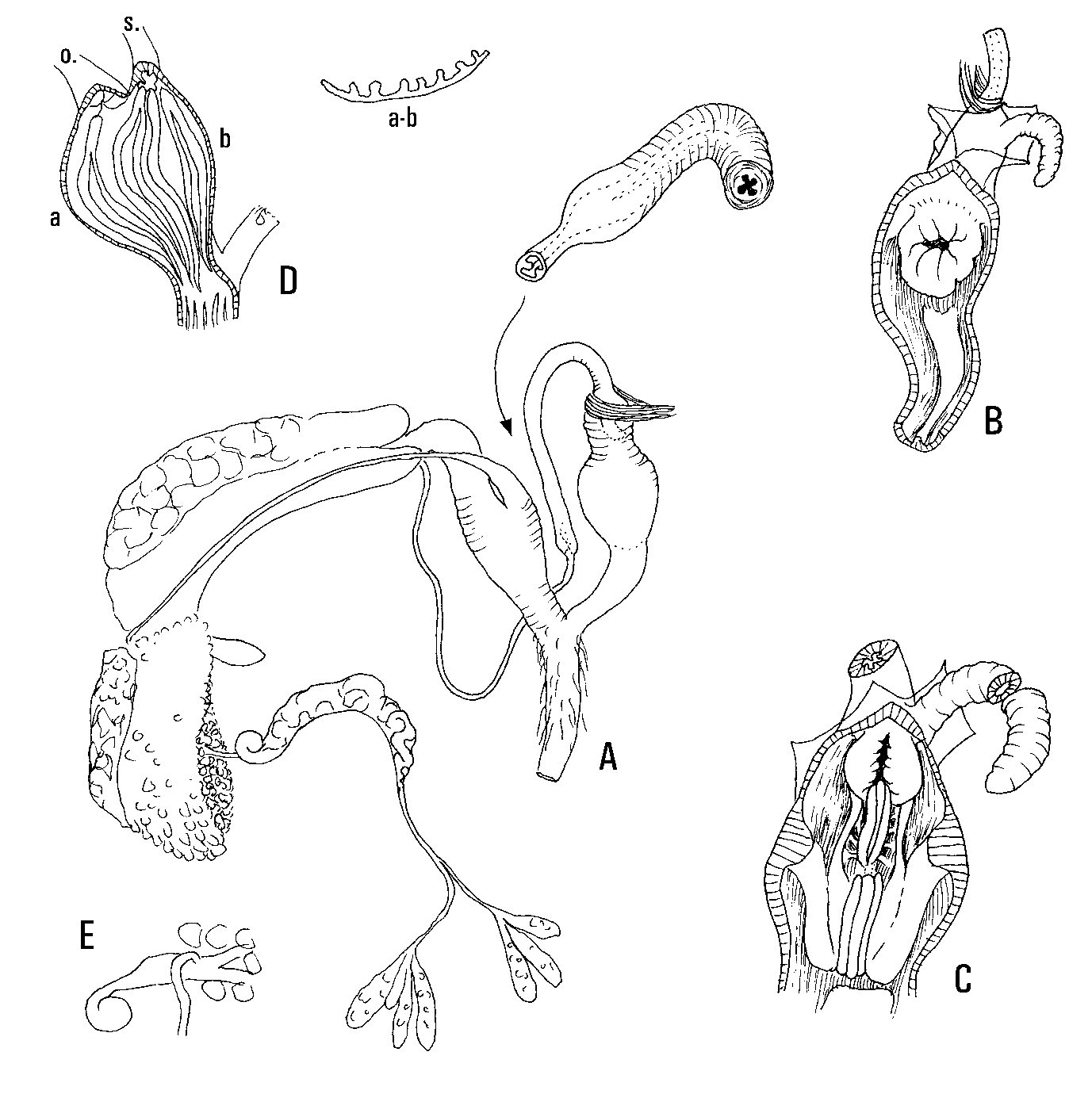
Ovotestis bilobed, the lobes made of smaller lobules. Hermaphroditic duct swollen basally, with a round talon. Albumen gland oblong, nearly as long as the spermoviduct. Spermatheca obovate on a slim, long stalk. Vagina very short. Radula 26-1-26: central tooth tricuspid, laterals bicuspid.
Type material
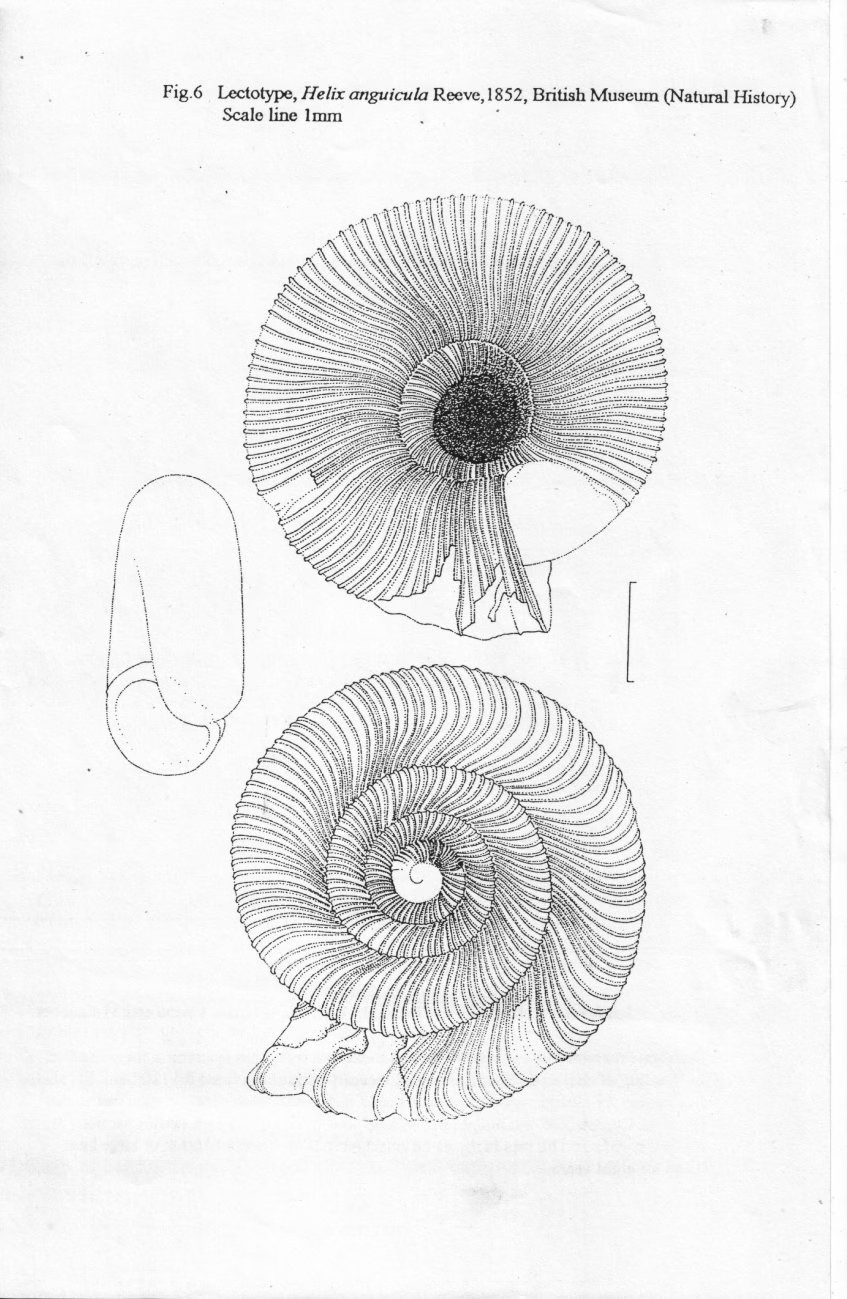
Lectotype (Climo, 1993, fig. 6) BMNH 1971049 and one paralectotype BMNH 1971050, Natural History Museum, London; “New Zealand” on the original label, H. Cuming collection.
Sources
- Described in: Reeve (1852), as Helix anguicula.
Images